
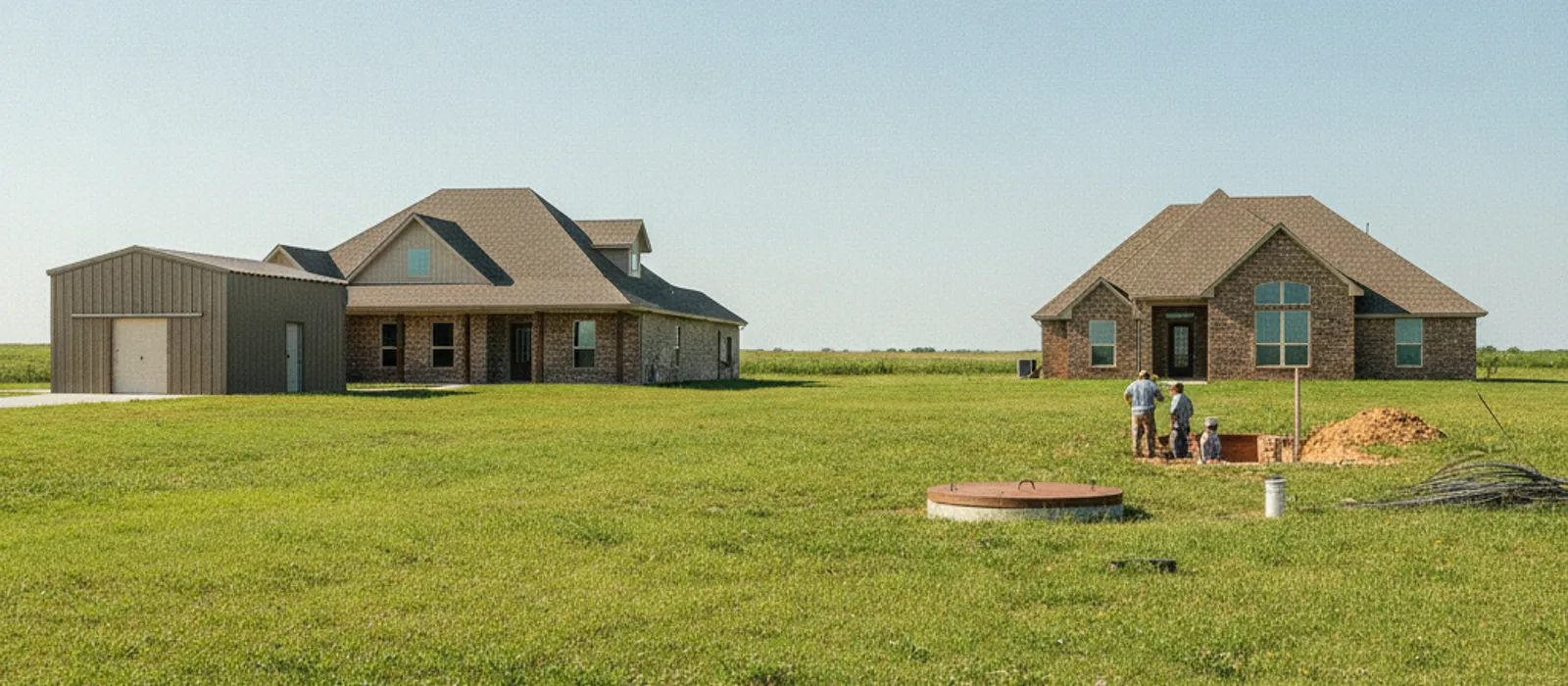
When a tornado warning blares across North Texas, every second counts. Choosing the right storm shelter for your family is a critical decision, directly impacting your safety during severe weather. Many homeowners in Sherman, Denison, and across the Texoma region grapple with the fundamental question: should I invest in an above ground vs underground storm shelter? Both options offer life-saving protection, but they differ significantly in design, installation, accessibility, and cost. Understanding these differences is key to making an informed choice for your property and peace of mind.
Texoma Storm Shelters installs both types of shelters, built to stringent FEMA P-320 and ICC-500 standards. We provide transparent guidance to help you select the best fit for your specific needs, whether that is a robust above-ground safe room or a discreet underground unit. Your family’s safety is our priority, and we offer free written estimates to begin your planning process. If you are ready to secure your home against tornadoes, contact us today at (903) 884-7210 or visit our /#contact page.
Understanding Above-Ground Safe Rooms
An above-ground safe room is a reinforced structure installed inside an existing building or as a standalone unit. Often placed in a garage, a master bedroom closet, or even a living room, these safe rooms provide immediate access during a sudden storm. They are constructed from heavy-gauge steel or concrete, designed to withstand EF5 tornado-force winds and impacts from flying debris. The primary advantage of an above-ground safe room is its accessibility, especially for individuals with mobility challenges.
These structures are bolted directly to the concrete slab of your home, ensuring they remain anchored even under extreme forces. Texoma Storm Shelters ensures every above-ground safe room meets or exceeds FEMA P-320 guidelines for safe room construction and ICC-500 standards for design and performance. This means they are tested to resist missile impacts and extreme wind pressures, offering proven protection when it matters most. For more detailed information, explore our dedicated page on /above-ground-safe-rooms/.
Advantages of Above-Ground Safe Rooms
Above-ground safe rooms offer several compelling benefits for homeowners in North Texas:
- Accessibility: This is often the most significant factor. There are no stairs or ladders to navigate, making them ideal for the elderly, individuals with disabilities, or those who use wheelchairs. You can simply walk in.
- Rapid Access: Located within your home, an above-ground safe room allows for quick entry when a tornado warning is issued, minimizing exposure to outdoor elements.
- Versatility in Placement: They can be installed in garages, closets, utility rooms, or even as part of a new home build. This flexibility allows for integration into your living space.
- No Water Intrusion Concerns: Unlike underground shelters, above-ground units are not susceptible to flooding from heavy rains or rising groundwater. This is a common concern in areas with high water tables.
- Additional Storage: When not in use as a storm shelter, many homeowners utilize their safe room for secure storage of valuables, firearms, or important documents.
- Easy Maintenance: Inspection and cleaning are straightforward since the unit is easily accessible and visible.
For a family in Van Alstyne with an elderly parent, an above-ground safe room installed in their garage provided peace of mind. The family chose a 4x6 foot steel safe room for $6,200. This allowed their parent to enter quickly without navigating steps, a crucial factor during sudden severe weather. The installation was completed in less than a day, integrating seamlessly into their existing garage space.
Disadvantages of Above-Ground Safe Rooms
While highly beneficial, above-ground safe rooms also have some drawbacks to consider:
- Space Requirement: They occupy valuable floor space within your home or garage. This can be a concern for smaller homes or garages with limited room.
- Aesthetics: While designs are improving, an above-ground unit is a visible addition to your home. Some homeowners prefer a more discreet option.
- Potential for Noise: Being inside the home, the sound of a tornado can be more intense than in an underground shelter, though the structure itself provides excellent sound dampening.
- Higher Initial Cost: Generally, above-ground safe rooms can have a slightly higher upfront cost due to the materials and specialized installation needed for their robust construction and anchoring.
Considering these factors helps homeowners weigh the practicalities against the critical safety benefits. Texoma Storm Shelters works to find the most suitable placement and design for your specific property, balancing safety with your home’s layout.
Exploring Underground Storm Shelters
Underground storm shelters are buried beneath the ground, typically in a backyard or garage floor. These shelters provide excellent protection by leveraging the earth as a natural barrier against wind and debris. They are commonly made from steel or fiberglass and feature a sturdy entry hatch, often with a ladder or steps leading down into the chamber. The primary appeal of an underground shelter lies in its discreet nature and inherent protection from ground-level impacts.
Our underground storm shelters are engineered to meet or exceed FEMA P-320 and ICC-500 standards. This means they are built to withstand immense pressure and provide a secure environment during the most violent storms. The earth surrounding the shelter acts as an insulating layer, offering a quiet and stable environment during a tornado event. You can learn more about our options at /underground-storm-shelters/. We also specialize in /garage-floor-shelters/, which offer a convenient underground option without leaving your home.
Advantages of Underground Storm Shelters
Underground shelters have distinct advantages that appeal to many North Texas residents:
- Superior Protection: Being below ground provides an extra layer of protection from wind, flying debris, and noise. The earth acts as a natural shield.
- Discreet Placement: Once installed, these shelters are largely out of sight, preserving your yard’s aesthetics. Garage floor shelters are completely hidden beneath a flush-mount lid.
- Temperature Regulation: The surrounding earth helps to maintain a more stable and cooler temperature inside the shelter, which can be a comfort during extended stays.
- Sense of Security: Many people feel an enhanced sense of security and isolation from the storm’s fury when completely enclosed underground.
For a homeowner in Pottsboro, worried about property aesthetics and maximum protection, an underground shelter was the ideal solution. They opted for a 6x8 foot steel underground shelter installed in their backyard for $7,500. This unit offered ample space for their family of five and was discreetly placed, blending into their landscaping after installation. The superior protection from high winds common near Lake Texoma was a key deciding factor.
Disadvantages of Underground Storm Shelters
Despite their robust protection, underground storm shelters present certain challenges:
- Accessibility Issues: Entry typically involves a ladder or steep steps, which can be difficult for young children, the elderly, or individuals with mobility impairments.
- Potential for Flooding: In areas with high water tables or during extremely heavy rainfall, there is a risk of water intrusion, though modern designs and proper installation techniques greatly mitigate this. Proper drainage and waterproofing are critical.
- Outdoor Exposure: If the shelter is in the yard, you must go outside during a storm to access it. This exposes you to severe weather conditions, including rain, hail, and lightning, before you reach safety.
- Installation Complexity: Installation often requires excavation, which can be more involved and potentially disruptive to landscaping than an above-ground installation.
- Claustrophobia: Some individuals may experience discomfort or claustrophobia in an enclosed, subterranean space.
Texoma Storm Shelters takes every precaution during installation to address potential issues like water intrusion. We ensure proper site assessment and drainage solutions for all underground units, providing peace of mind even during the heaviest Texoma downpours.
Key Considerations: Above Ground vs Underground Storm Shelter
When evaluating an above ground vs underground storm shelter, several factors should guide your decision. Your family’s specific needs, your property’s characteristics, and your budget all play a significant role. It is not a one-size-fits-all solution, and a thorough assessment is crucial.
Accessibility Needs
This is perhaps the most critical differentiator. If anyone in your household has mobility issues, uses a wheelchair, or struggles with stairs, an above-ground safe room is almost always the superior choice. Its walk-in access eliminates barriers during an emergency. For families with young children, the ease of entry and exit can also be a significant benefit. Underground shelters, with their ladders or steps, require more physical agility.
Location and Space Availability
Consider where you want to place your shelter. Do you have an open spot in your garage or a large closet that could be converted? An above-ground safe room might fit perfectly. If you prefer to keep your indoor space clear and have ample backyard area, an underground shelter could be ideal. Garage floor shelters offer a unique blend, providing underground protection within the convenience of your home. However, not all garage slabs are suitable for this type of installation without modification.
Water Table and Drainage
North Texas can experience significant rainfall, and the local water table varies. For underground shelters, a high water table or poor drainage can pose a risk of flooding. While Texoma Storm Shelters employs advanced waterproofing and drainage techniques, it is a factor to discuss. Above-ground safe rooms are naturally immune to ground-level water intrusion.
Installation Process and Timeline
Installing an above-ground safe room is generally less invasive and quicker, often completed in a single day. It primarily involves anchoring the unit to your existing concrete slab. Underground shelters require excavation, which can be a multi-day process involving heavy equipment and potential disruption to your yard or garage floor. Both types require professional installation to ensure they meet stringent safety standards.
Cost and Rebate Opportunities
The cost of a storm shelter is a major factor for most families. While prices vary based on size, materials, and features, both types represent a significant investment in safety. However, local and federal programs can help offset these costs.
For example, Grayson County often participates in FEMA’s Hazard Mitigation Grant Program (HMGP) or other state-funded rebate programs. These programs can provide substantial financial assistance, sometimes covering a significant portion of the installation cost. A family in Sherman recently qualified for a $3,000 rebate on their $7,000 underground garage floor shelter, significantly reducing their out-of-pocket expense. Always check current rebate availability with your local emergency management office or visit our blog post on [/blog/grayson-county-storm-shelter-rebate/] for more information.
Cost Comparison: Above-Ground Safe Room vs. Underground Storm Shelter
Understanding the typical costs involved is crucial for budgeting. While exact prices depend on size, material, and specific features, here is a general comparison for residential installations in the Texoma area. These figures include standard installation by Texoma Storm Shelters. For a precise quote tailored to your needs, we always recommend a free written estimate. You can also explore our /storm-shelter-cost/ page for more details.
| Feature / Type | Above-Ground Safe Room (Steel) | Underground Storm Shelter (Steel) | Garage Floor Shelter (Steel) |
|---|---|---|---|
| Typical Size Range | 4’x4’ to 8’x12’ | 4’x6’ to 8’x10’ | 4’x6’ to 6’x8’ |
| Entry Method | Walk-in door (ADA compliant options) | Steep steps or ladder | Flush-mount lid with ladder |
| Installation Time | 1 day | 1-2 days (excavation) | 1-2 days (concrete work) |
| Average Cost Range | $5,500 - $12,000 | $6,500 - $11,000 | $7,000 - $13,000 |
| Key Advantage | Accessibility, no flooding risk | Superior earth protection, discreet | Convenient, hidden in garage |
| Key Consideration | Interior space usage, visible | Accessibility, potential flooding | Garage floor modification |
It is important to remember that these are averages. A larger, custom-built unit will naturally cost more than a standard size. Rebates and financing options can also significantly impact your out-of-pocket expenses. We encourage you to contact us for a personalized consultation and a clear, transparent estimate.
Real-World Scenarios in Texoma & North Texas
Understanding how these shelters perform in real-life situations helps solidify your decision. North Texas, particularly Grayson, Fannin, and Cooke counties, is no stranger to severe weather. Having a reliable storm shelter is not a luxury; it is a necessity.
Case Example 1: Sherman Family with Mobility Concerns
A family in Sherman, TX, with an elderly grandmother living with them, prioritized easy access. They chose a 6x8 foot above-ground steel safe room, installed in their garage for $7,800. This unit provided ample space for the entire family and was wheelchair-accessible. During a severe thunderstorm watch last spring, they were able to move their grandmother into the safe room quickly and without struggle, providing immediate safety and comfort. This type of immediate, barrier-free access is invaluable.
Case Example 2: Denison Homeowner Seeking Discreet Protection
A homeowner in Denison wanted robust protection but did not want a visible structure impacting their backyard landscaping. They opted for a 5x7 foot underground storm shelter, installed in their backyard for $7,000. The installation involved careful excavation and backfilling, ensuring minimal disruption to their established garden. After installation, the only visible element was a small, flush-mounted lid. This solution provided the deep-earth protection they desired while maintaining their property’s aesthetic appeal.
Case Example 3: Gunter Family and Rebate Success
A Gunter family was concerned about the cost of a storm shelter but understood the critical need. They decided on a 4x6 foot garage floor shelter for $7,200. After consulting with Texoma Storm Shelters, they learned about an available state rebate program for storm shelters. We guided them through the application process, and they successfully secured a $3,000 rebate, bringing their net cost down to $4,200. This made a significant difference in their ability to afford a life-saving investment. Always inquire about current rebate opportunities as these can change annually. You can learn more about financial assistance in our blog post about [/blog/storm-shelter-financing-options/].
Installation and Safety Standards
Regardless of whether you choose an above ground vs underground storm shelter, proper installation is paramount to its effectiveness. A shelter is only as strong as its weakest point, and that often comes down to how it is installed and anchored. Texoma Storm Shelters adheres strictly to federal guidelines and local codes to ensure maximum safety.
All our storm shelters and safe rooms are designed and installed to meet or exceed the rigorous standards set by FEMA P-320 (Taking Shelter from the Storm: Building a Safe Room for Your Home or Small Business) and ICC-500 (Standard for the Design and Construction of Storm Shelters). These standards cover everything from material strength and welding integrity to anchoring systems and ventilation. For example, FEMA P-320 specifies that components must withstand pressures equivalent to an EF5 tornado and resist impacts from 15-lb 2x4 lumber traveling at 100 mph.
Our licensed and insured installers have extensive experience in the unique soil conditions and building practices of Grayson, Fannin, and Cooke counties. We handle all aspects of the installation, from site preparation and excavation (for underground units) to anchoring and final inspection. We also help guide you through any necessary local permits, such as those often required in Sherman or Denison. Ensuring your shelter is correctly anchored to your home’s foundation or a dedicated concrete slab is critical for preventing uplift or displacement during a tornado. For insights into installation specifics, read our article on [/blog/storm-shelter-installation-cost-factors/].
Preparing for Severe Weather in North Texas
Having a storm shelter is a crucial step, but it is just one part of a comprehensive severe weather plan. North Texas faces a significant threat from tornadoes, especially during spring and fall. Being prepared means knowing when to seek shelter and having an emergency plan in place.
Emergency Kits and Supplies
Every storm shelter, regardless of type, should have a well-stocked emergency kit. This kit should include water, non-perishable food, first-aid supplies, flashlights, a weather radio, blankets, and any necessary medications. Consider adding a portable phone charger and a whistle. For more details on what to include, check out our guide on [/blog/emergency-kit-storm-shelter/].
Communication and Family Plans
Discuss your family’s severe weather plan regularly. Everyone should know where the shelter is located, how to access it, and what to do if family members are separated. Designate an out-of-state contact person for family members to check in with. Stay informed about local weather alerts through NOAA weather radio, local news, or weather apps. The National Weather Service in Fort Worth provides excellent resources at https://www.weather.gov/fwd/.
Regular Maintenance
Just like any other essential home feature, your storm shelter requires occasional maintenance. For underground shelters, ensure the entry hatch operates smoothly and that ventilation systems are clear. For above-ground safe rooms, check door latches and hinges. Keep the area around your shelter clear of debris and easily accessible. Our blog post on [/blog/storm-shelter-maintenance-tips/] offers practical advice.
Making Your Decision with Texoma Storm Shelters
Choosing between an above-ground safe room and an underground storm shelter is a significant decision. It is an investment in your family’s safety and peace of mind. Texoma Storm Shelters is here to help you navigate this choice with clear, practical, and authoritative guidance. We are licensed and insured, offering free written estimates and an emergency line for severe weather and storm shelter installation. Our expertise in the Texoma and North Texas region, including Grayson, Fannin, and Cooke counties, ensures we understand the specific needs of our community.
Whether you prioritize accessibility, discreet placement, or specific cost considerations, we have a solution that meets FEMA P-320 and ICC-500 standards. Do not wait for the next severe storm to consider your options. Take proactive steps today to protect your loved ones. Contact Texoma Storm Shelters at (903) 884-7210 or email info@texomastormshelters.com to schedule your free consultation. Let us help you build a safer future.
Frequently Asked Questions
### What are the main accessibility differences between above-ground and underground storm shelters?
Above-ground safe rooms offer walk-in access, making them ideal for individuals with mobility challenges, the elderly, or those using wheelchairs. Underground shelters typically require navigating a ladder or steps, which can be difficult for some individuals. Accessibility is a primary consideration for many families.
### Do storm shelters require special permits in North Texas counties like Grayson, Fannin, or Cooke?
Yes, most storm shelter installations require local building permits to ensure they meet safety codes and are properly integrated with your property. Texoma Storm Shelters can guide you through the permitting process, which can vary slightly between cities like Sherman, Denison, or Van Alstyne. We ensure all installations comply with local regulations.
### Can I install a storm shelter myself to save money?
While it might seem like a way to save on costs, professional installation by a licensed and insured contractor is crucial for ensuring your storm shelter meets critical safety standards like FEMA P-320 and ICC-500. Improper installation can compromise the shelter’s integrity during a tornado. Texoma Storm Shelters provides expert installation, ensuring your shelter offers the protection it is designed for.
### How do I determine the right size storm shelter for my family?
The ideal size depends on the number of people in your household, including pets, and how long you anticipate needing to shelter. FEMA guidelines recommend at least 3 square feet per person. For example, a family of four would need a minimum of 12 square feet. It is wise to consider future family growth and the comfort of having enough space during a potentially stressful event.